
Wine Fun Facts
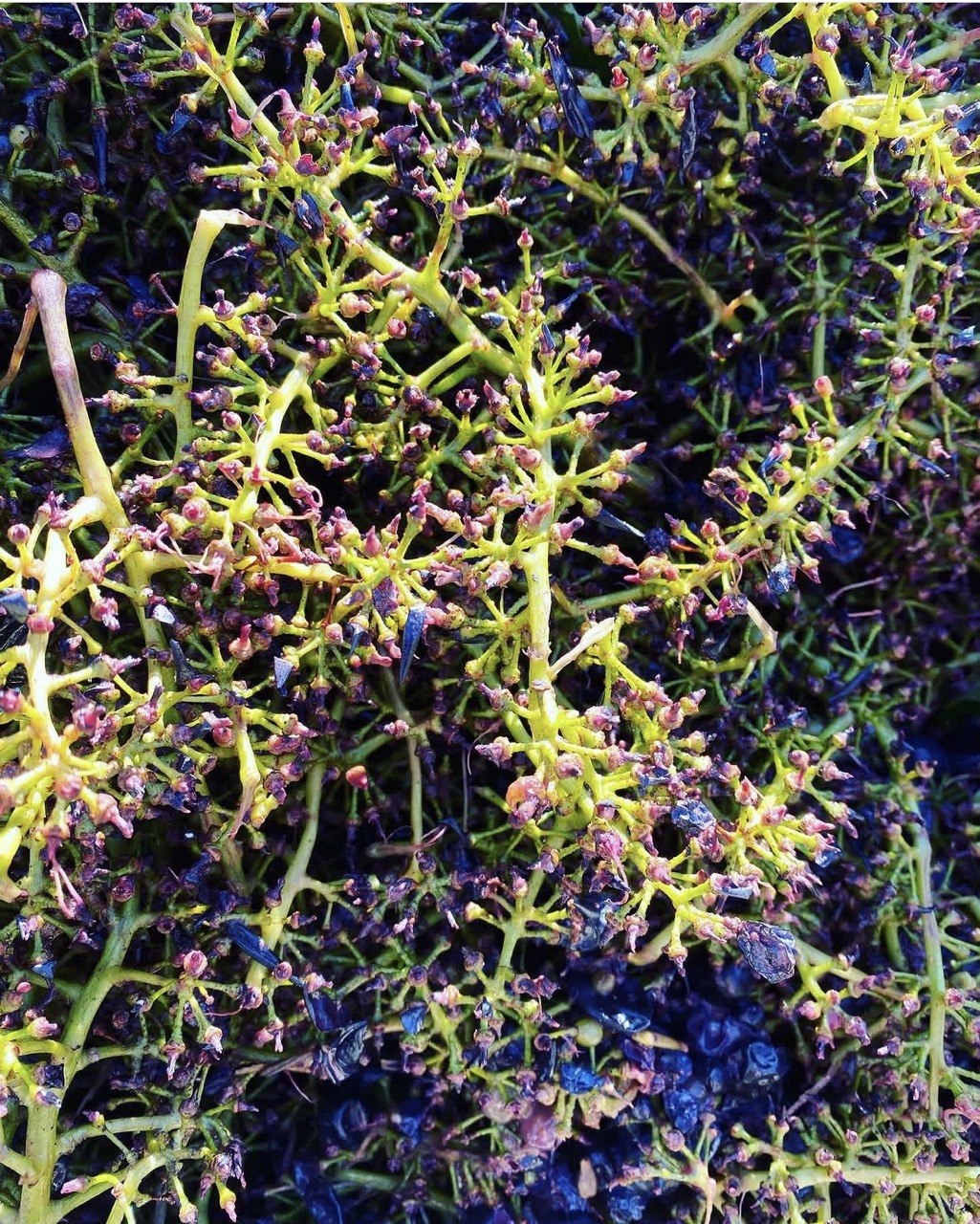
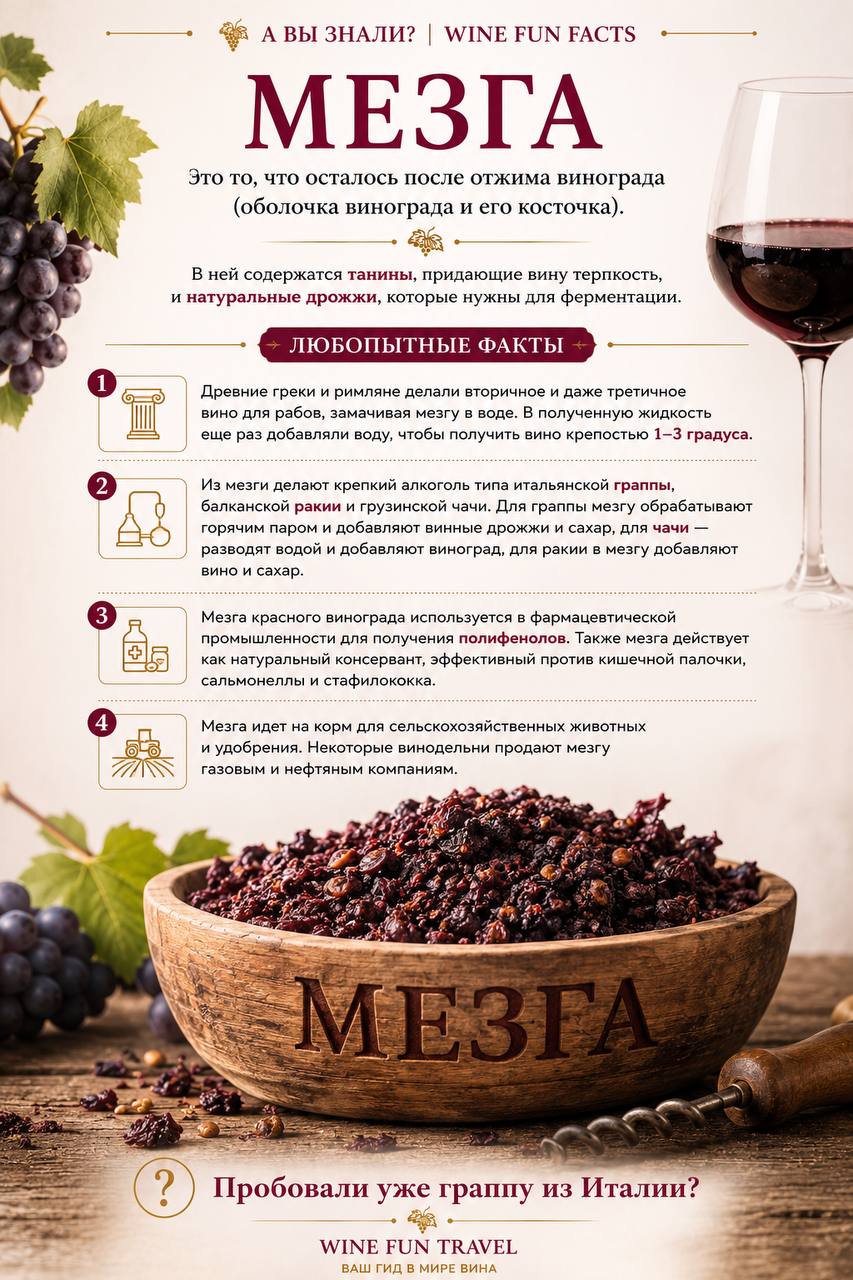
Pomace contains tannins, which contribute to wine’s structure, as well as natural yeasts that play a role in fermentation.
But the most interesting part begins after the wine has been made.
What happens to grape pomace?
- Behind every glass of wine lies a fascinating story!
In Ancient Greece and Rome, pomace was used to make a second and even a third wine.
It is also used to produce famous grape-based spirits such as Italian grappa, Georgian chacha and Balkan rakia.
Thanks to its high polyphenol content, pomace is used in cosmetics, pharmaceuticals and even wine spas.
It can also be turned into natural fertiliser, animal feed and even a raw material for renewable energy production.
So, grapes get a second life after pressing, and very little goes to waste.
Have you ever tried authentic Italian grappa?
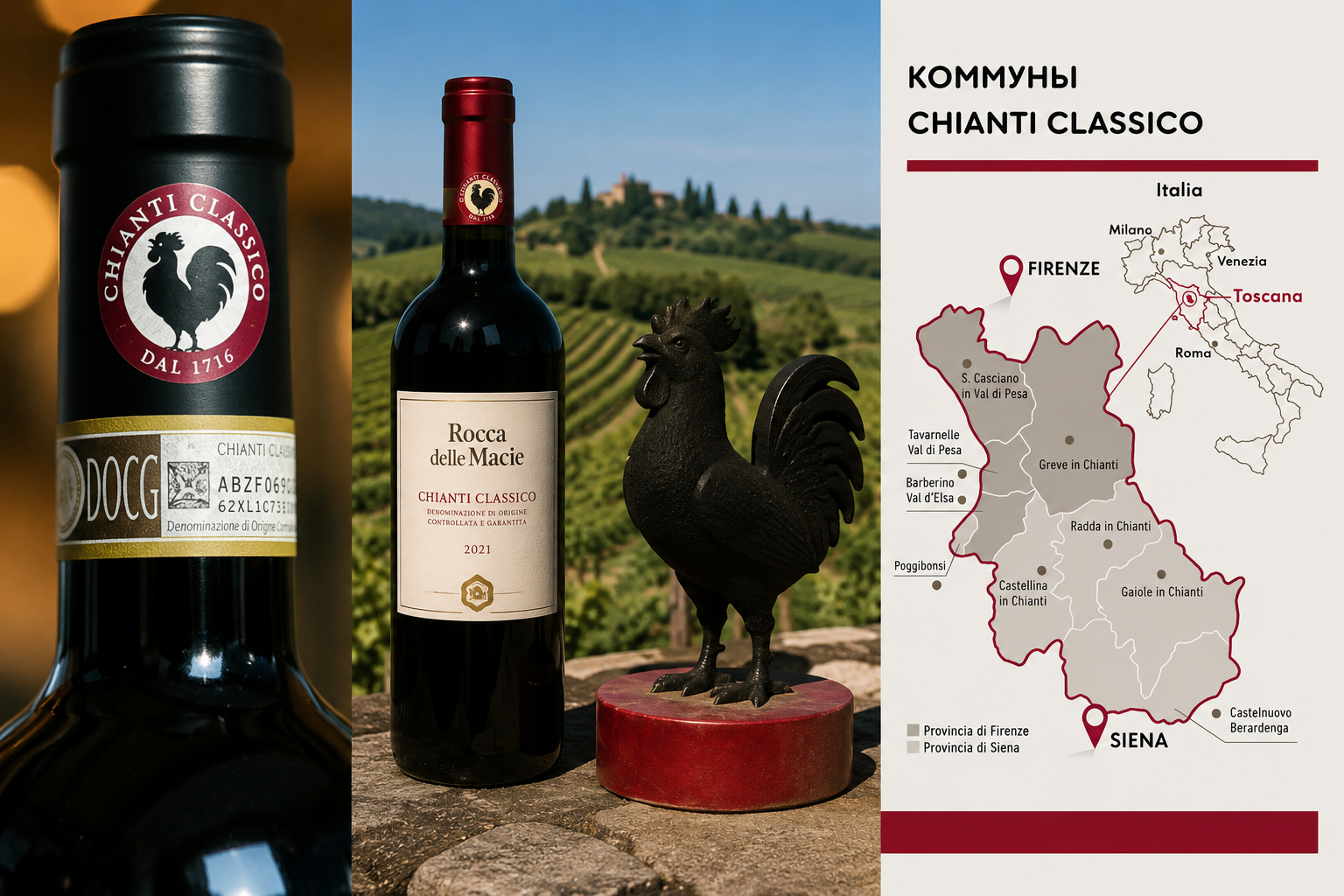
According to legend, Florence and Siena were disputing control over the Chianti territory and decided to settle the matter in an unusual way: a horseman from each city would set off at dawn, and the point where they met would mark the border between their territories.
The people of Siena chose a white rooster and fed it well. The Florentines, on the other hand, kept their black rooster hungry — and it began crowing before dawn. The Florentine horseman set off earlier and, according to the legend, met his rival only about 20 kilometres from the walls of Siena.
The official Chianti Classico Consortium confirms that the Gallo Nero emblem is now mandatory on bottles of Chianti Classico. It may appear on the front label, neck label or back label.
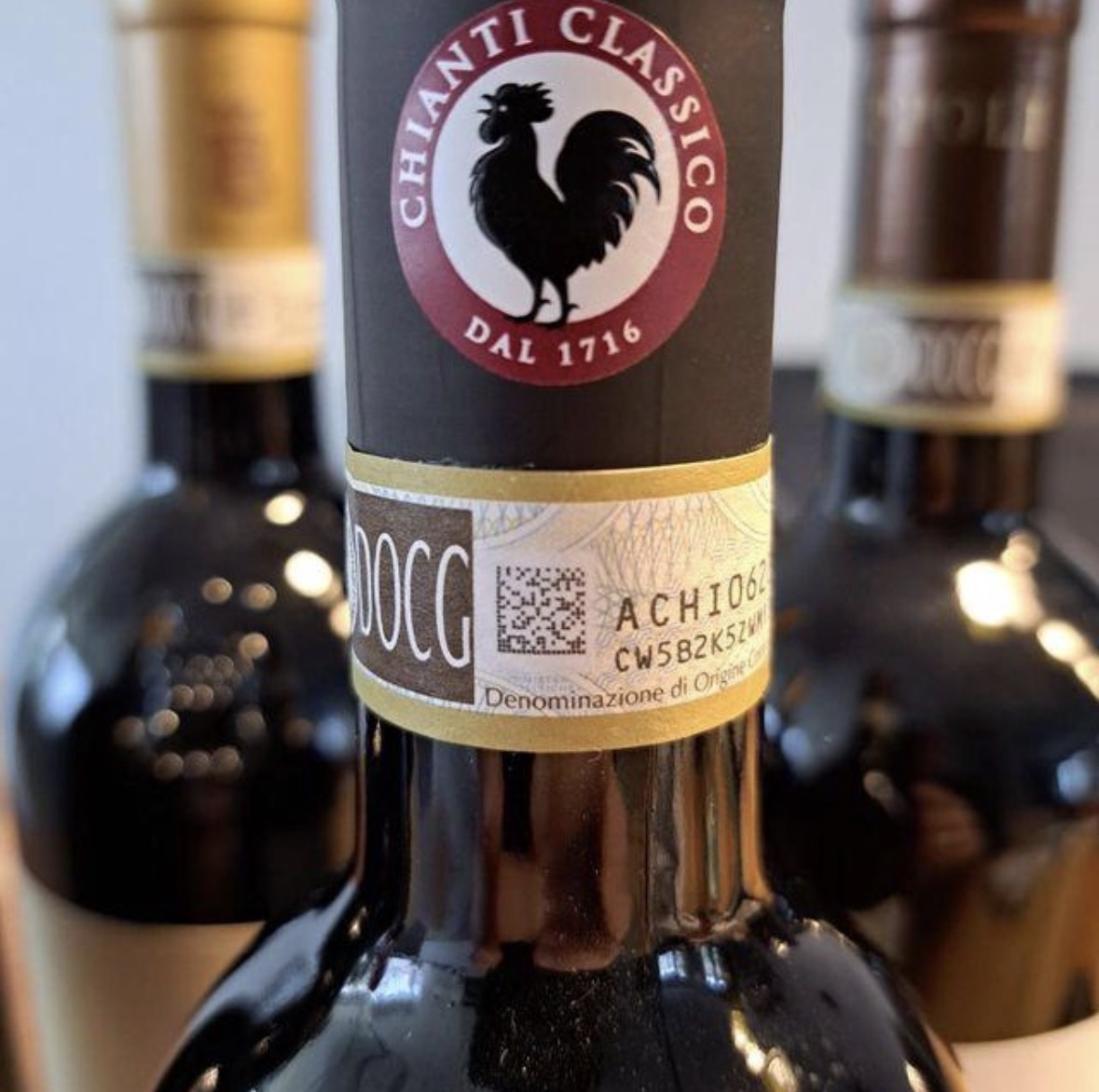
Wine Fun Facts: The story behind the Black Rooster
In 1384, the Gallo Nero became the emblem of the League of Chianti, a political and military organisation established by Florence to control the territory.
Centuries later, on 14 May 1924, 33 wine producers gathered in Radda in Chianti and founded Italy’s first wine consortium. They chose the very same Black Rooster as their symbol, reviving the historic emblem of the League of Chianti.
And so, the legendary rooster made its journey from a medieval emblem to the iconic symbol of Chianti Classico wine.
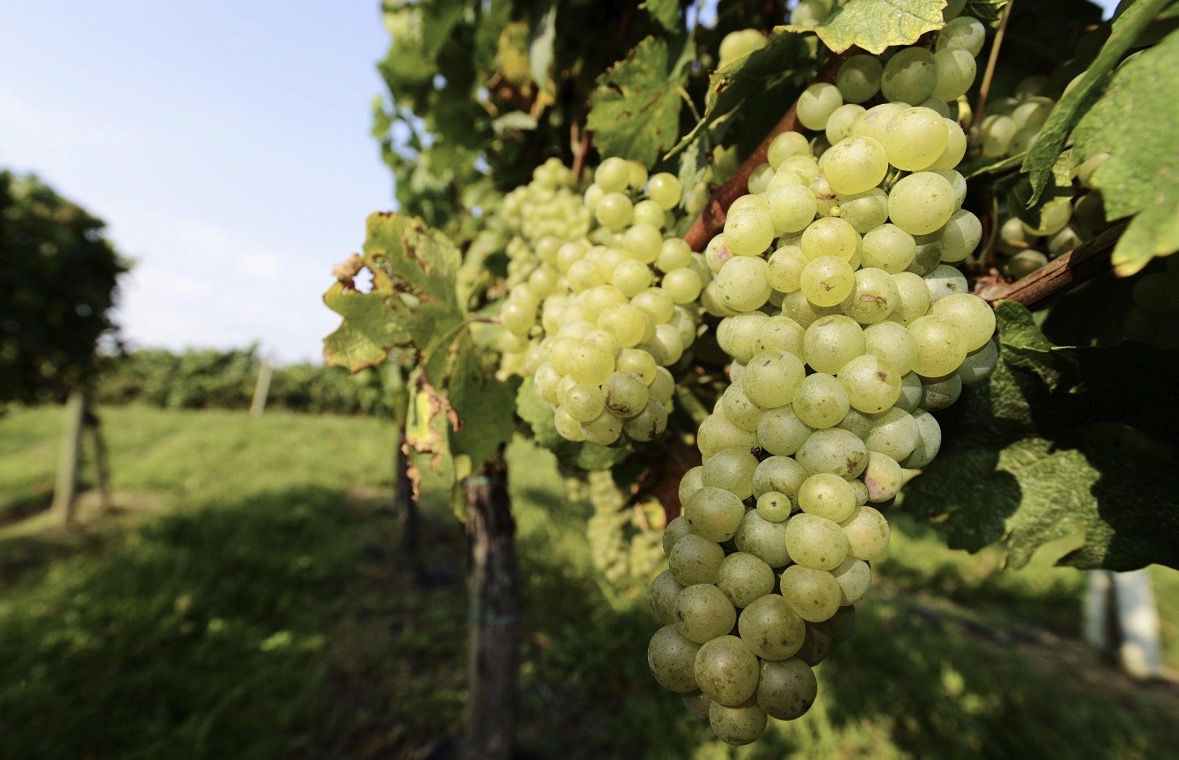
Erbamat is an ancient white grape variety native to the province of Brescia in Lombardy. It ripens considerably later than Chardonnay and retains high acidity.
These characteristics have become increasingly valuable in a warming climate. Earlier grape ripening and higher temperatures can lead to lower acidity, while Erbamat can help preserve the freshness needed for sparkling wine production.
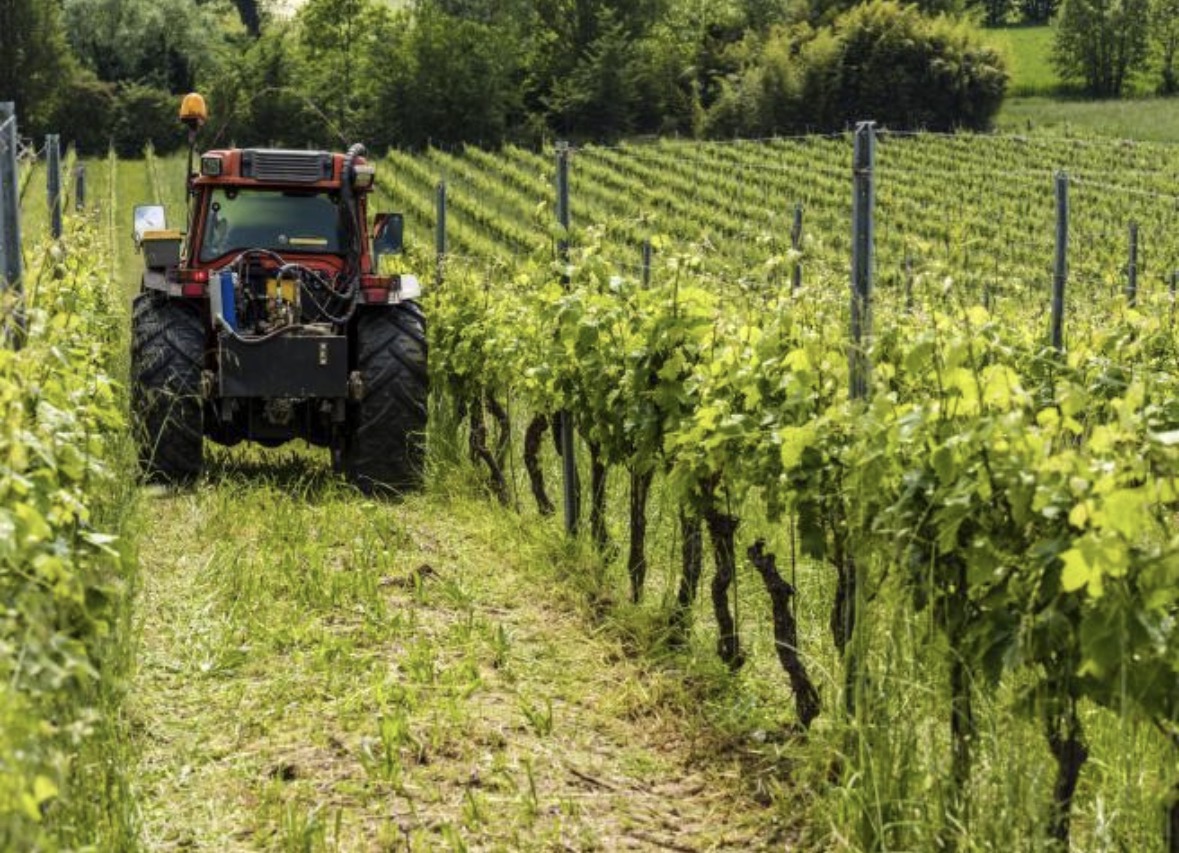
Why is Erbamat so important?
- In 2017, Erbamat was officially included in the Franciacorta production regulations, allowing it to account for up to 10% of the blend. It is not permitted in Franciacorta Satèn.
Wineries such as Castello Bonomi and Barone Pizzini are among the producers exploring this local grape variety as an investment in the region’s future in the face of climate change.
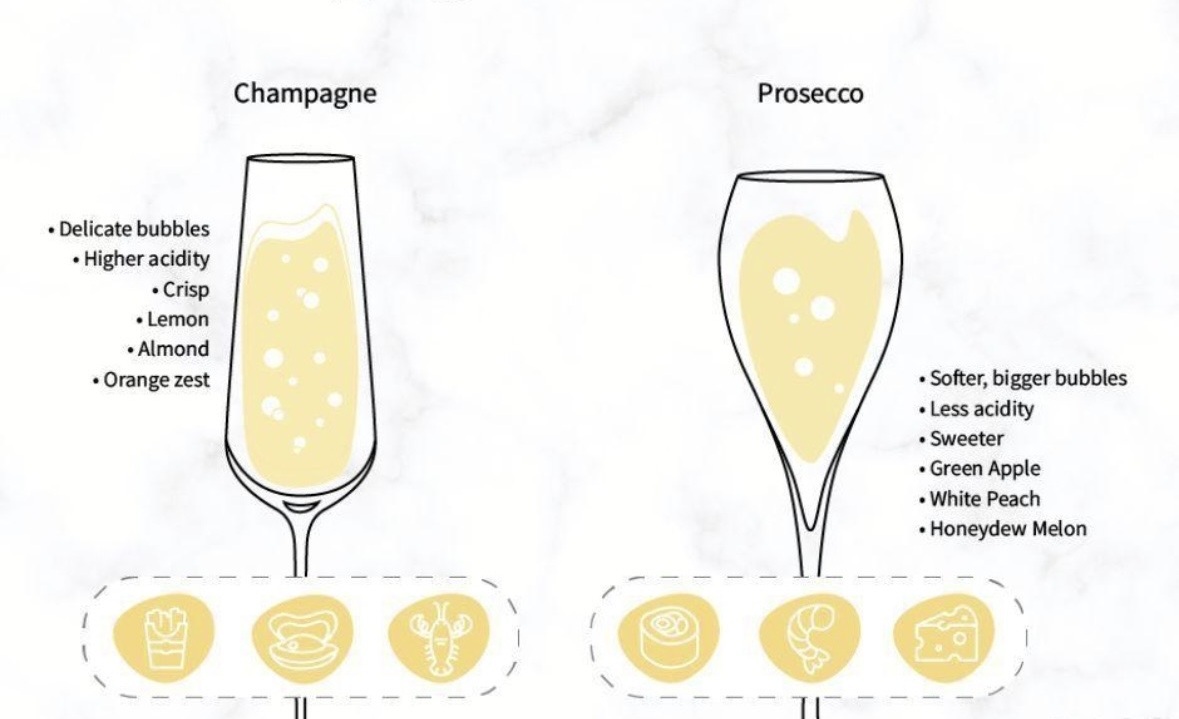
Millions of people around the world choose Prosecco for parties, get-togethers with friends, and summer evenings on the terrace.
But what is its secret? Why did this particular Italian sparkling wine from northeastern Italy become a true global phenomenon?
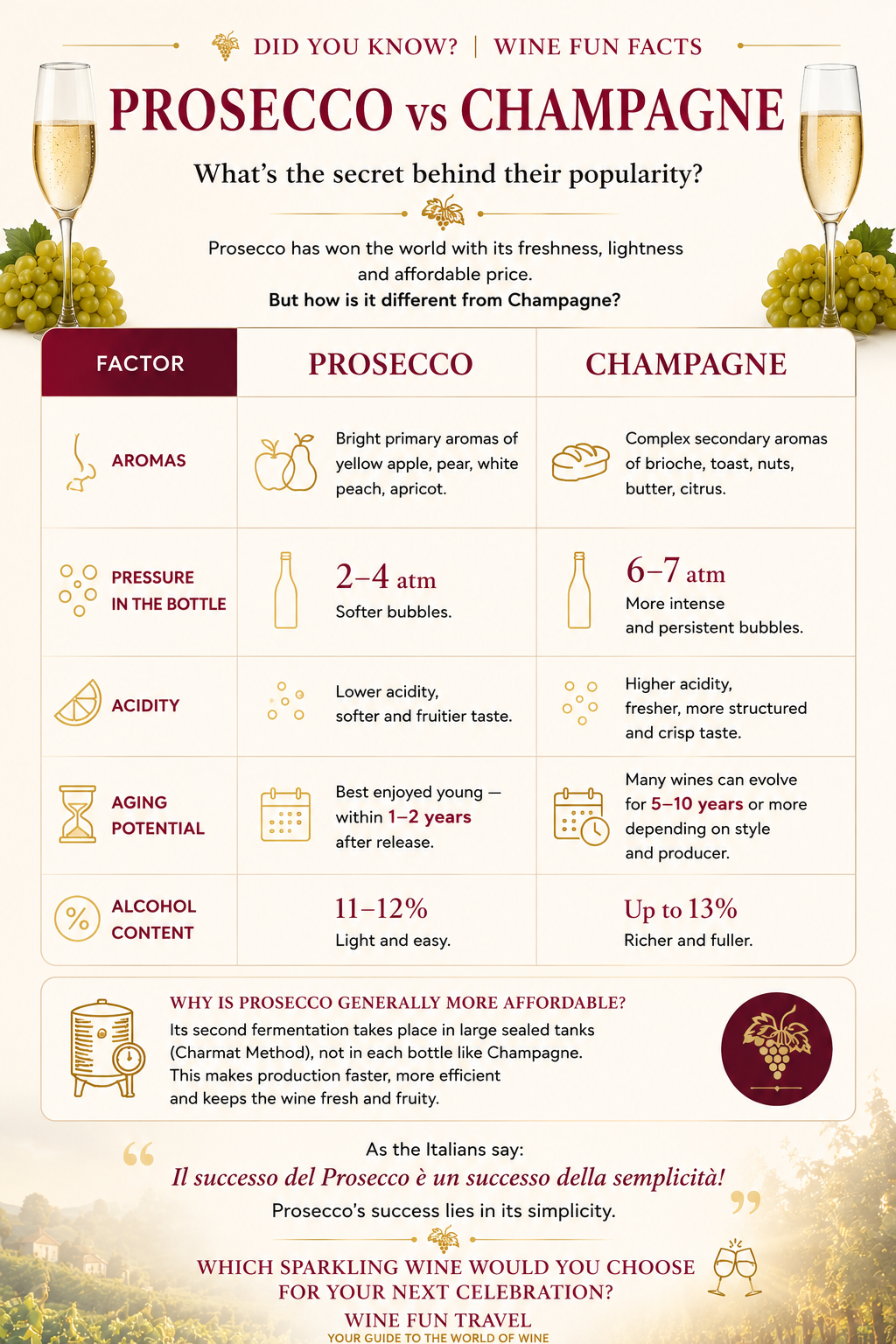
There is interesting point:
- Carbon dioxide helps the body absorb alcohol more quickly, so more intense bubbles can intensify the effect of the alcohol.
⏳ When should you drink it? Champagne can age beautifully in the bottle over the years. Prosecco, however, is crafted for youth and freshness. It is best consumed young—typically within one to two years of release.
Italians say: “Il successo del Prosecco è un successo della semplicità” - “The success of Prosecco lies in its simplicity..”
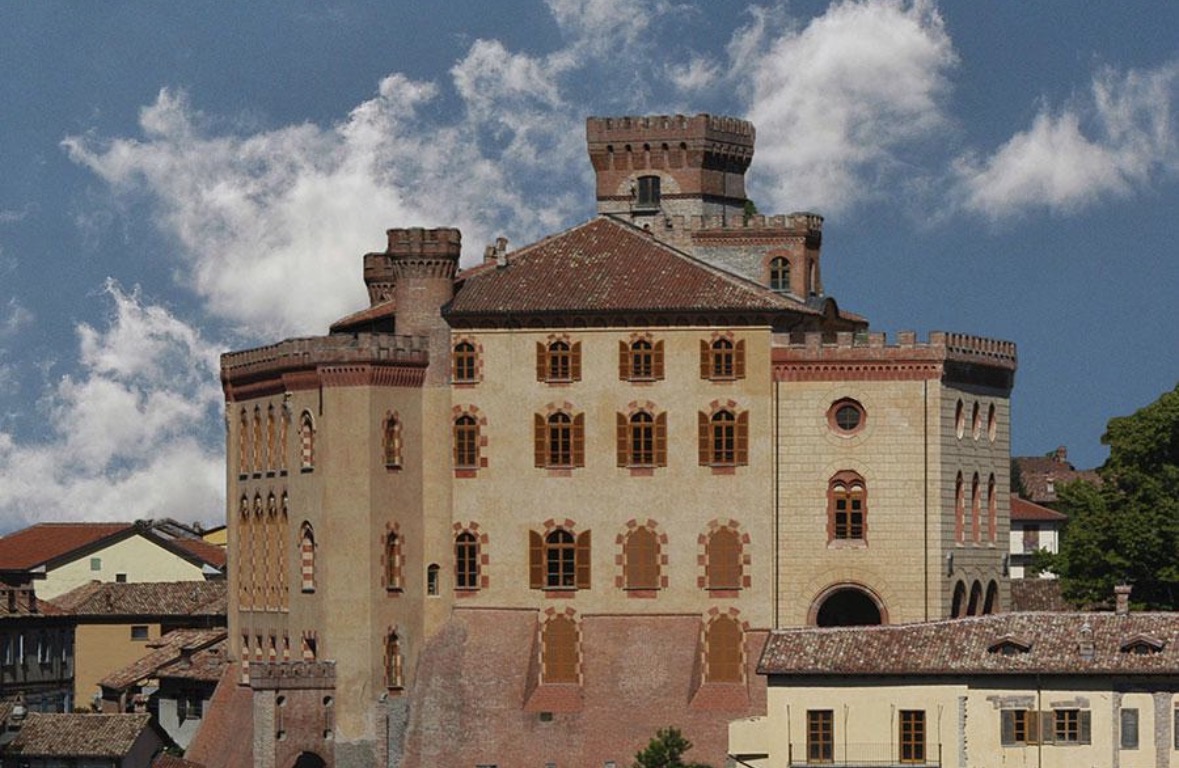
Barolo is home to one of Italy’s most fascinating wine museums. At WiMu, the story of wine comes alive through music, art, film, and immersive multimedia installations.
Rather than focusing only on winemaking, the museum explores how wine has shaped culture, history, and human connections for centuries.

Piedmont is often compared to Burgundy because of its countless small vineyard owners and the unique personality of each individual vineyard site.
It’s the kind of place where you don’t just learn about wine — you experience it. 🍷
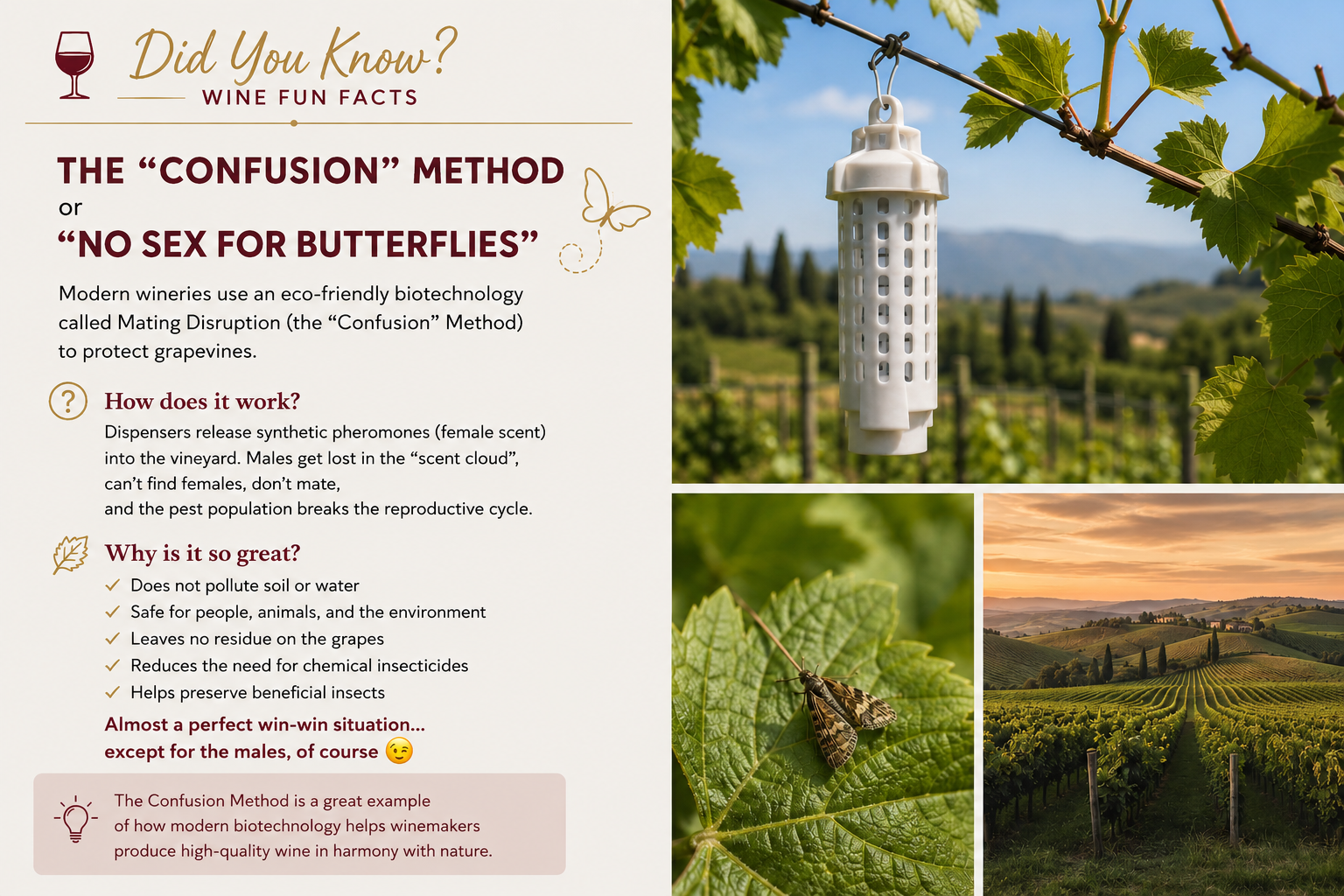
Modern wineries are increasingly protecting their vineyards with an eco-friendly biotechnology called Mating Disruption.
Instead of spraying insecticides, winemakers place pheromone dispensers throughout the vineyard. These release synthetic female scents, creating an invisible “scent cloud.” Male moths become confused, can’t find their mates, and the pest’s breeding cycle is naturally interrupted.
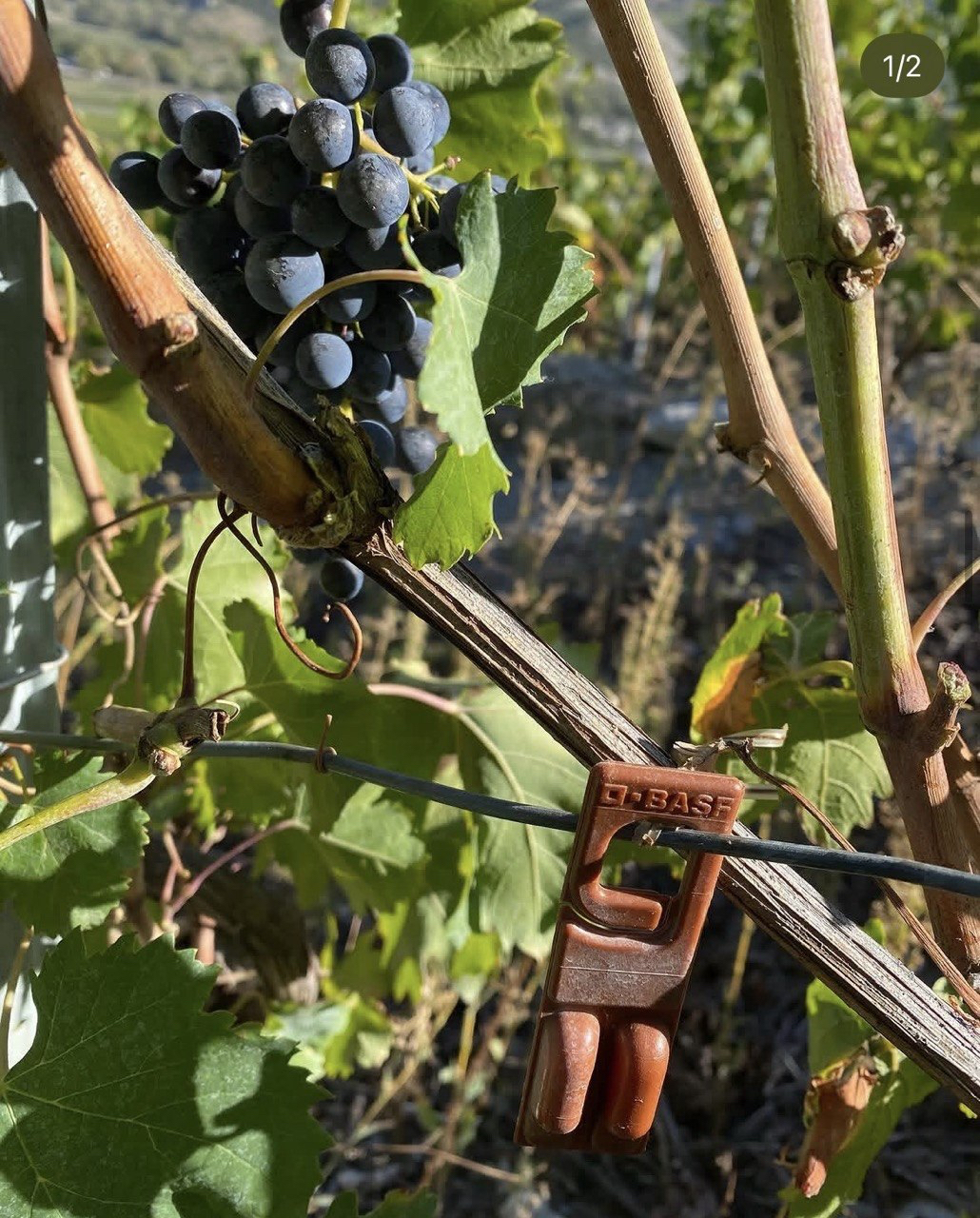
Why is it such a smart solution?:
- Keeps soil and water clean
- Safe for people, wildlife, and beneficial insects
- Leaves no chemical residues on the grapes
- Significantly reduces the need for chemical insecticides
It’s almost the perfect win-win solution… except for the male moths, of course. 😉
milanwinexpert@gmail.com
